
Introduction
Feeling tired all the time is a common concern faced by people of all ages. Many individuals experience low energy even after a full night’s sleep, which can affect productivity, mood, and daily activities. Constant tiredness may be linked to lifestyle habits, dietary patterns, sleep quality, stress levels, or daily routines. Understanding the possible reasons behind ongoing fatigue can help individuals make informed lifestyle adjustments. This article explains common causes of feeling tired and practical, non-medical ways that may help improve energy levels naturally.
Common Causes of Feeling Tired All the Time
1. Poor Sleep Quality
Even if you spend enough time in bed, poor sleep quality can leave you feeling exhausted. Factors such as irregular sleep schedules, excessive screen time before bed, or an uncomfortable sleeping environment may interfere with restful sleep. Light sleep or frequent awakenings during the night can reduce overall energy during the day.
2. High Stress Levels
Mental and emotional stress can drain energy levels significantly. Ongoing stress may keep the body in a constant state of alertness, making relaxation difficult. Over time, this can result in persistent tiredness and difficulty concentrating.
3. Lack of Physical Activity
While it may seem counterintuitive, a sedentary lifestyle can contribute to low energy. Regular movement can support better circulation and help the body feel more active. People who sit for long hours may experience sluggishness and reduced motivation.
4. Unbalanced Diet
Diet plays an important role in daily energy levels. Consuming foods high in sugar and refined carbohydrates may cause quick energy spikes followed by sudden drops. Skipping meals or relying heavily on processed foods can also contribute to feeling tired throughout the day.
5. Dehydration
Not drinking enough water can affect how the body functions. Even mild dehydration may lead to fatigue, headaches, and difficulty focusing. Many people underestimate their daily water intake, especially during busy schedules.
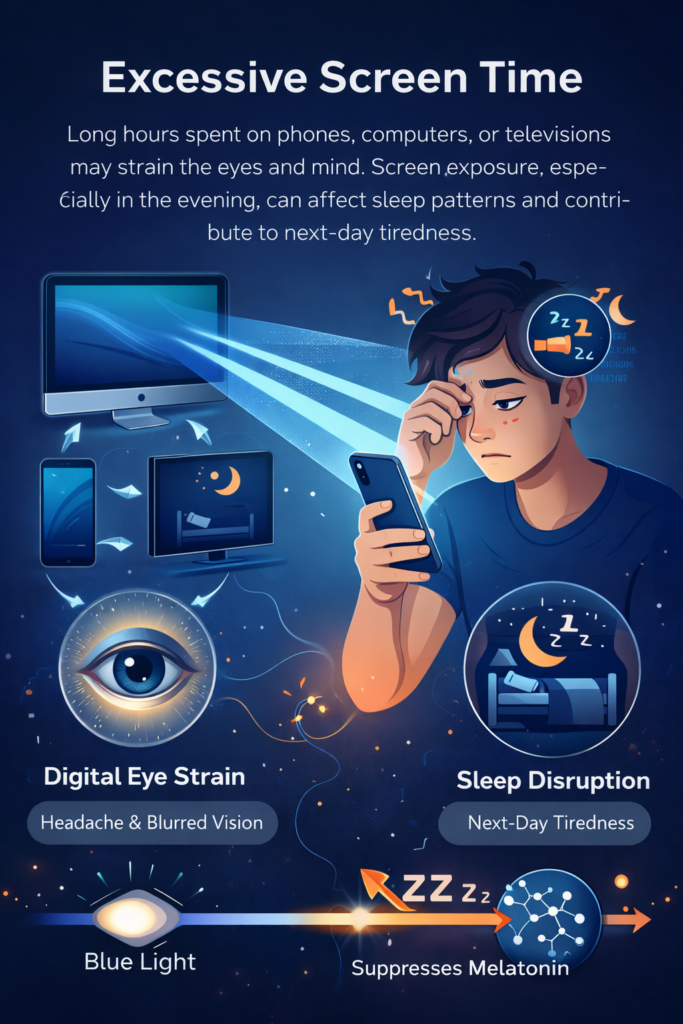
6. Excessive Screen Time
Long hours spent on phones, computers, or televisions may strain the eyes and mind. Screen exposure, especially in the evening, can affect sleep patterns and contribute to next-day tiredness.
7. Irregular Daily Routine
Inconsistent meal times, irregular sleep schedules, and lack of routine can confuse the body’s internal clock. This disruption may result in feeling tired even without heavy physical work.
Signs That Your Tiredness Needs Attention
While occasional fatigue is normal, ongoing tiredness may be noticeable through:
- Feeling low on energy most days
- Difficulty focusing or concentrating
- Lack of motivation
- Feeling sleepy during the daytime
If tiredness continues for a long period, professional guidance may be helpful.
Simple Lifestyle Fixes That May Help Improve Energy Levels
1. Improve Sleep Habits
- Maintain a consistent sleep schedule
- Avoid screens at least one hour before bedtime
- Create a quiet and comfortable sleep environment
Better sleep routines may support improved daily energy.
2. Focus on Balanced Meals
Including a variety of foods may help maintain steady energy levels:
- Whole grains
- Fruits and vegetables
- Protein-rich foods
- Healthy fats
Avoid skipping meals, as this may contribute to sudden drops in energy.
3. Stay Hydrated
Drinking sufficient water throughout the day can support normal body functions. Carrying a water bottle may help maintain hydration, especially during long work hours.
4. Add Light Physical Activity
Simple activities such as walking, stretching, or gentle exercises may help reduce feelings of sluggishness. Regular movement can support better circulation and alertness.
5. Manage Daily Stress
Stress management techniques may help conserve energy:
- Deep breathing
- Short breaks during work
- Spending time on relaxing activities
Reducing stress may help the body feel less drained.
6. Limit Screen Time Before Bed
Reducing screen exposure in the evening may support better sleep quality. Reading a book or practicing relaxation techniques instead of screen use can be beneficial.
7. Create a Consistent Daily Routine
A structured routine may help the body adapt better to daily activities. Consistent timing for meals, sleep, and work can support stable energy levels.
Foods That May Support Better Energy
Some foods are commonly associated with sustained energy:
- Oats
- Bananas
- Nuts and seeds
- Yogurt
- Leafy vegetables
Combining different nutrients may help avoid sudden energy crashes.
When to Be More Careful
If tiredness continues despite lifestyle adjustments, or if it interferes significantly with daily life, seeking professional advice may be helpful. Ongoing fatigue should not be ignored.
Frequently Asked Questions
Is feeling tired every day normal?
Occasional tiredness is common, but daily fatigue may be influenced by lifestyle factors that need attention.
Can diet affect energy levels?
Yes, food choices may influence how energetic or tired you feel during the day.
Does exercise help with tiredness?
Light to moderate activity may help improve alertness and reduce sluggishness.
Conclusion
Feeling tired all the time can be frustrating, but it is often influenced by daily habits and routines. Factors such as sleep quality, diet, hydration, stress, and physical activity may all play a role. Making small, consistent lifestyle changes can support better energy levels over time. Paying attention to your body’s needs and maintaining balance in daily routines may help reduce persistent tiredness.
Health Disclaimer
This article is for informational purposes only and is not intended as professional health advice. Always seek guidance from a qualified professional regarding personal health concerns.