Introduction
In today’s digital world, screens are an unavoidable part of daily life. Smartphones, laptops, tablets, and televisions are used for work, communication, learning, and entertainment. While these devices offer convenience and connectivity, excessive screen time—especially during the evening—may affect sleep quality. Many people struggle with falling asleep, staying asleep, or feeling refreshed in the morning, and prolonged screen exposure could be one contributing factor. Understanding how screen time may influence sleep can help individuals make informed lifestyle adjustments to support better rest.
What Is Screen Time?
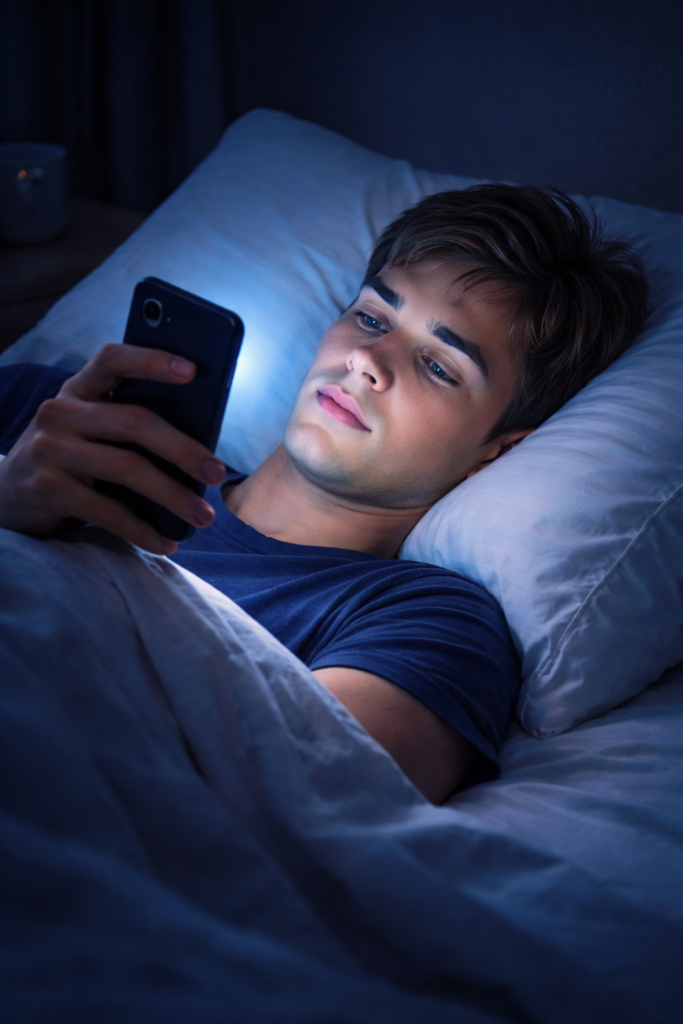
Screen time refers to the amount of time spent using digital devices with screens, such as mobile phones, computers, televisions, and tablets. Screen usage can vary widely depending on profession, lifestyle, and habits. While moderate screen use during the day may not be problematic, excessive or poorly timed screen exposure—particularly before bedtime—may interfere with the body’s natural sleep rhythm.
How Sleep Works in the Body
Sleep is regulated by an internal body clock that responds to light and darkness. As evening approaches, the body naturally prepares for rest by slowing down activity and promoting relaxation. Darkness signals the body that it may be time to sleep, while light signals alertness. Disruptions to this natural rhythm may affect how easily a person falls asleep and how restful that sleep feels.
How Excessive Screen Time May Affect Sleep
1. Blue Light Exposure
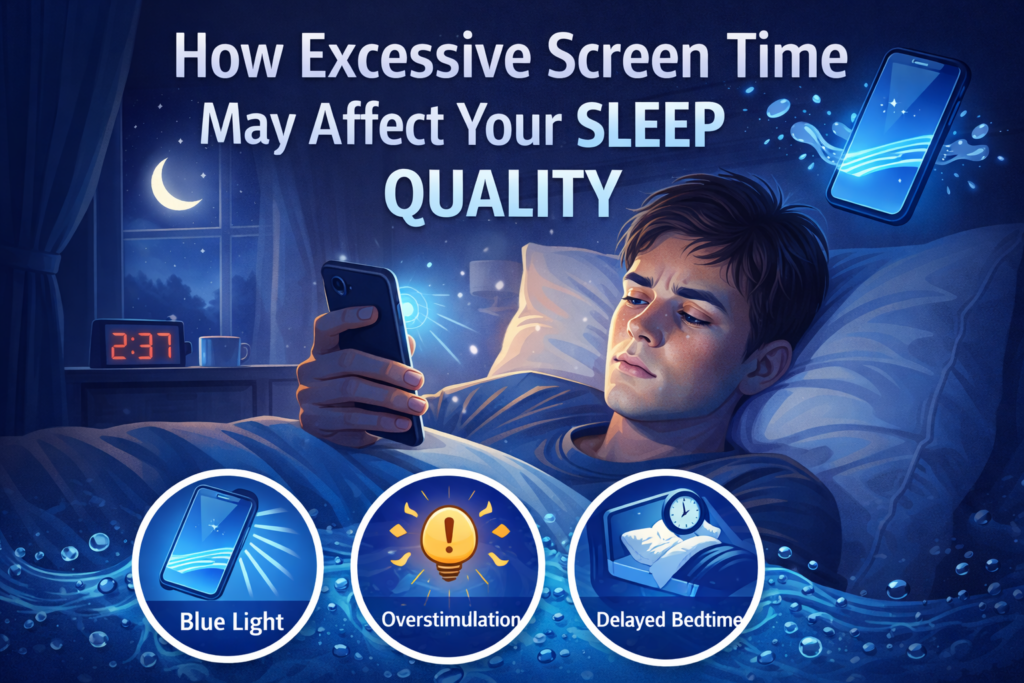
Digital screens emit blue light, which may interfere with the body’s natural sleep-wake cycle. Exposure to blue light in the evening may signal the brain to remain alert, making it harder to feel sleepy. This effect can delay the body’s natural preparation for rest, especially when screens are used close to bedtime.
2. Mental Overstimulation
Using screens often involves consuming engaging content such as social media, videos, games, or work-related tasks. This type of mental stimulation may keep the brain active when it should be winding down. As a result, relaxation may become difficult, even after turning the device off.
3. Delayed Bedtime
Screen use can easily extend bedtime without being noticed. Watching one more video, scrolling through social media, or responding to messages may gradually push sleep time later. This delay can reduce total sleep duration, especially on workdays with fixed wake-up times.
4. Reduced Sleep Quality
Even when sleep occurs, excessive screen exposure before bed may affect sleep depth. Light sleep or frequent awakenings during the night may leave a person feeling unrefreshed in the morning.
5. Nighttime Notifications and Interruptions
Keeping devices close to the bed may result in notifications, vibrations, or screen lighting during the night. These interruptions can break sleep cycles and reduce overall rest quality, even if the person does not fully wake up.
Signs That Screen Time May Be Affecting Your Sleep
Some common signs that excessive screen use may be impacting sleep include:
- Difficulty falling asleep
- Feeling restless at night
- Waking up feeling tired
- Daytime sleepiness
- Reduced focus or concentration
- Dependence on caffeine to stay alert
These signs may gradually appear and worsen over time if habits remain unchanged.
How Screen Time Can Affect Daily Energy Levels
Poor sleep quality may affect how energetic a person feels during the day. When sleep is disrupted, the body may not fully recover from daily activities. This can result in low energy, reduced motivation, and difficulty focusing. Over time, poor sleep patterns may affect productivity and mood.
Screen Time and Sleep in Children and Teenagers
Children and teenagers may be especially sensitive to screen exposure. Evening screen use may delay sleep schedules, reduce sleep duration, and affect focus during school hours. Establishing screen-free routines before bedtime may help younger individuals develop healthier sleep habits early in life.
Does Screen Time Affect Everyone the Same Way?
The impact of screen time can vary from person to person. Some individuals may be more sensitive to light and stimulation, while others may notice fewer effects. Factors such as age, daily routine, work schedule, and overall lifestyle may influence how screen use affects sleep.
Healthy Screen Habits That May Support Better Sleep
1. Set a Screen-Free Time Before Bed
Reducing screen use at least 60 minutes before bedtime may help the body transition into rest mode. This time can be used for relaxing activities.
2. Use Night or Warm-Light Modes
Many devices offer settings that reduce blue light emission. While not a complete solution, these features may help minimize light-related disruption.
3. Create a Relaxing Bedtime Routine
Replacing screen time with calming habits such as reading, listening to soft music, or light stretching may help signal the body that it is time to rest.
4. Keep Devices Away From the Bed
Charging phones away from the bed may reduce nighttime interruptions and the temptation to check screens during the night.
5. Maintain Consistent Sleep Timing
Going to bed and waking up at similar times each day may help regulate the body’s internal clock, improving sleep quality over time.
Balancing Screen Time in a Digital World
Completely avoiding screens is not realistic for most people. The goal is balance rather than elimination. Being mindful of screen use, especially in the evening, may help reduce negative effects on sleep while still allowing the benefits of technology.
When to Be More Careful
If sleep issues continue for a long time or significantly affect daily life, seeking professional guidance may be helpful. Persistent sleep problems should not be ignored.
Conclusion
Excessive screen time, particularly before bedtime, may interfere with sleep quality by affecting natural sleep rhythms, mental relaxation, and bedtime routines. Small changes such as limiting evening screen use, managing notifications, and creating a calming bedtime routine may help support better sleep over time. Improving sleep quality may also contribute to better energy levels, focus, and overall daily well-being.
Health Disclaimer
This article is for informational purposes only and is not intended as professional health advice. Always seek guidance from a qualified professional regarding personal health concerns.