Introduction
Water is essential for daily life, yet many people are unsure about how much water they should drink each day. Some advice suggests drinking a fixed number of glasses, while other sources recommend listening to thirst signals. In reality, hydration needs can vary depending on factors such as body size, daily activity, weather, and lifestyle habits. Drinking too little water may affect energy levels, focus, and overall comfort, while drinking excessive amounts may not always be necessary. This article explains daily water needs in a simple and practical way, helping you understand how hydration can support everyday body functions without confusion or extreme recommendations.
Why Water Is Important for the Body
Water plays a role in many everyday processes within the body. It may help regulate body temperature, support digestion, and assist in transporting nutrients. Water also supports joint lubrication and helps remove waste through natural processes such as sweating and urination. Since the human body is made up largely of water, even small changes in hydration levels can affect how the body feels and functions throughout the day.
When water intake is insufficient, people may notice changes in energy levels, concentration, or physical comfort. Staying hydrated may help the body function more smoothly during daily activities.
Is There a Fixed Amount of Water Everyone Should Drink?
There is no single amount of water that works for everyone. Hydration needs can vary widely depending on individual circumstances. While general guidelines are often shared, they should be viewed as flexible rather than strict rules.
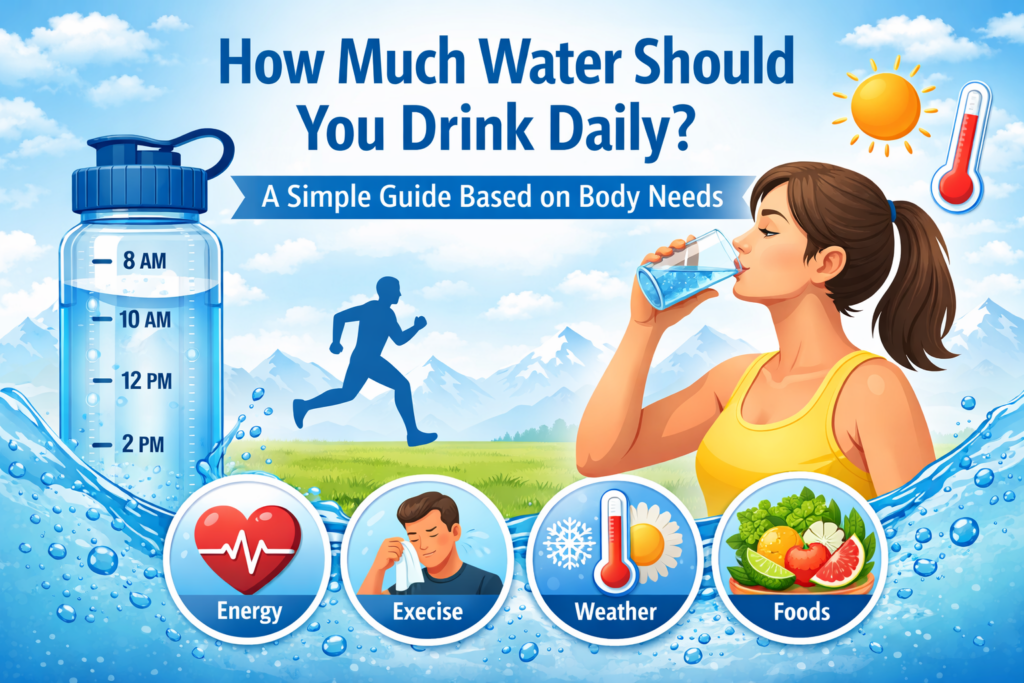
Factors that may influence water needs include:
- Body size and weight
- Physical activity levels
- Climate and temperature
- Daily routine and work environment
For example, someone who is physically active or lives in a hot climate may need more water than someone who spends most of the day indoors in a cooler environment.
Understanding Thirst Signals
Thirst is one of the body’s natural ways of signaling the need for fluids. However, thirst signals may not always appear immediately. Some people may already be mildly dehydrated before they feel thirsty. Paying attention to thirst while also maintaining regular water intake throughout the day may help support better hydration.
Relying only on thirst might not always be enough, especially for individuals with busy schedules who may forget to drink water regularly.
Signs You May Not Be Drinking Enough Water
The body may show certain signs when fluid intake is low. These signs can vary but may include:
- Dry mouth or lips
- Dark-colored urine
- Feeling tired or sluggish
- Difficulty concentrating
- Mild headaches
These signs do not always indicate serious issues, but they may suggest that increasing water intake could be helpful.
Can Dehydration Affect Energy Levels?
Even mild dehydration may affect how energetic a person feels during the day. When the body lacks adequate fluids, it may not perform daily functions as efficiently. This can lead to feelings of tiredness, reduced alertness, and lack of motivation. Maintaining hydration may help support steady energy levels, especially during long work hours or physical activity.
How Climate and Weather Affect Water Needs
Weather conditions can play a significant role in hydration requirements. Hot and humid environments may increase fluid loss through sweating. In such conditions, the body may require additional fluids to maintain balance. Cold weather can also affect hydration, as people may feel less thirsty and drink less water even though the body still needs fluids.
Adjusting water intake based on weather conditions may help maintain comfort and balance.
Role of Physical Activity in Hydration
Physical activity increases fluid loss through sweat. People who engage in regular exercise or physically demanding work may need additional water to replace lost fluids. Even light activities such as walking or household tasks can contribute to daily fluid needs.
Drinking water before, during, and after physical activity may help maintain hydration levels.
Water From Foods: An Often Overlooked Source
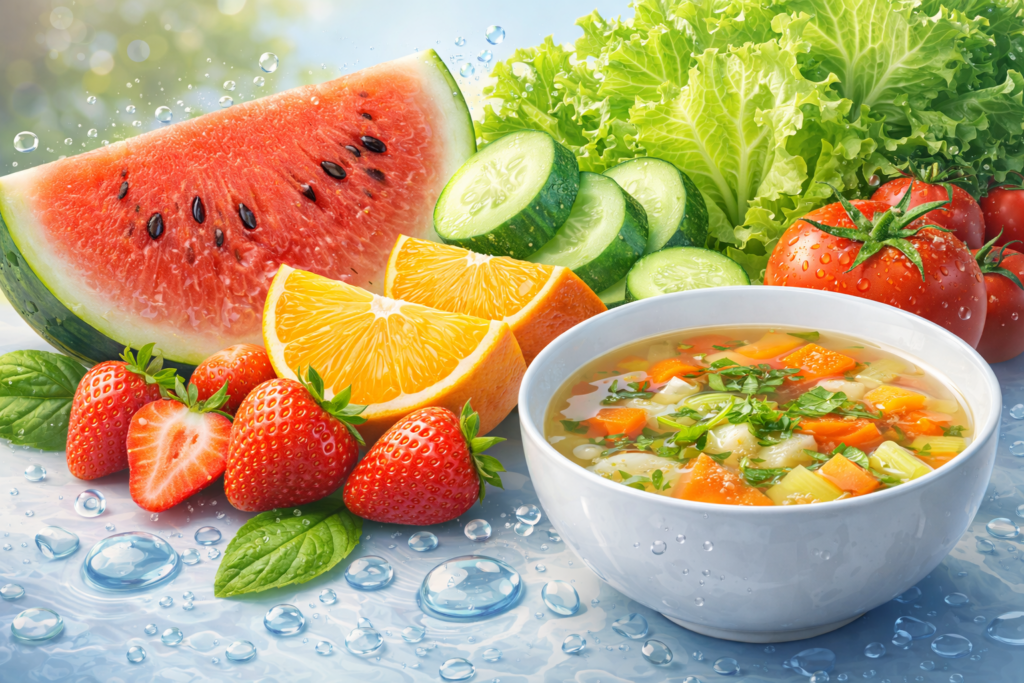
Water intake does not come only from drinking fluids. Many foods contain significant amounts of water and can contribute to overall hydration. Examples include:
- Fruits such as watermelon, oranges, and strawberries
- Vegetables like cucumber, lettuce, and tomatoes
- Soups and broths
Including water-rich foods in daily meals may support hydration, especially for individuals who struggle to drink enough water.
Can You Drink Too Much Water?
While staying hydrated is important, excessive water intake in a short period may not always be beneficial. Drinking large amounts of water without balance can affect the body’s natural fluid regulation. Moderation and awareness of individual needs are key. Spacing water intake throughout the day rather than consuming large quantities at once may be more supportive.
Practical Tips to Maintain Healthy Hydration
Here are simple ways that may help maintain proper hydration:
- Keep a reusable water bottle nearby
- Drink water at regular intervals
- Include water-rich foods in meals
- Drink a glass of water after waking up
- Pay attention to urine color as a general hydration indicator
Small habits practiced consistently may help support better hydration over time.
Hydration for Busy Lifestyles
People with busy schedules may forget to drink water regularly. Setting reminders or linking water intake with daily habits, such as drinking a glass of water before meals, may help maintain consistency. Office workers, students, and travelers can benefit from planning hydration as part of their routine.
When to Be More Careful
If someone experiences ongoing discomfort, dizziness, or persistent fatigue despite maintaining hydration, seeking professional guidance may be helpful. Individual needs can vary, and personalized advice can provide clarity.
Conclusion
Daily water needs are influenced by many factors, including body size, activity level, climate, and lifestyle habits. There is no universal rule that applies to everyone. Paying attention to thirst, daily routines, and physical signals may help individuals understand their hydration needs better. Maintaining balanced water intake throughout the day can support comfort, focus, and overall well-being.
Health Disclaimer
This article is for informational purposes only and is not intended as professional health advice. Always seek guidance from a qualified professional regarding personal health concerns.